

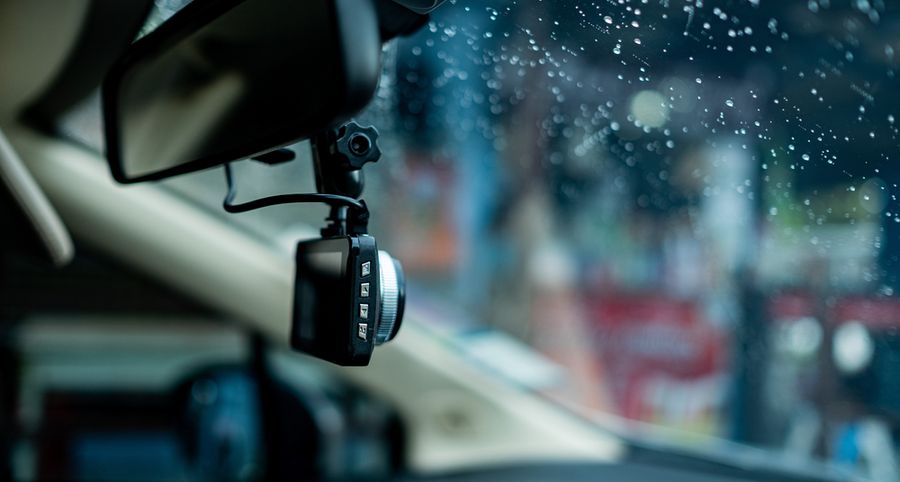
A dash cam can continue protecting a vehicle after the engine is turned off, but parking features vary widely between models. Some cameras record impacts, while others watch for nearby movement, save footage from several angles, or send remote alerts. Power requirements also matter because most parking modes need a hardwire kit or another constant power source. Several dash cams offer distinct solutions for drivers who want evidence of incidents involving an unattended vehicle.
Thinkware U3000 Pro for Low-Power Radar Monitoring
The Thinkware U3000 Pro stands out for its built-in front and rear radar sensors. In Radar Parking Mode, the sensors monitor movement around the vehicle while the cameras remain in a low-power state. When something enters the selected range, the system wakes up and records a 20-second video clip.
The camera also offers motion and impact detection, time-lapse recording, and an energy-saving mode. When an impact occurs during radar monitoring, the U3000 Pro saves footage from before and after the event. This combination suits drivers who leave their cars at airports, apartment lots, or workplaces for extended periods and want to limit power use.
BlackVue DR970X-2CH LTE Plus II for Remote Access
The BlackVue DR970X-2CH LTE Plus II combines a 4K front camera with a Full HD rear camera. Its built-in LTE connection and BlackVue Cloud compatibility support remote features when the camera has a suitable data connection. The North American model includes a nano-SIM card reader, but the SIM card itself isn’t included.
Parking Mode works with battery-discharge protection, helping prevent the camera from drawing the vehicle battery below a selected level. A separate dash cam battery can provide longer monitoring without relying as heavily on the vehicle’s battery. This model is a strong fit for drivers who value front-and-rear recording and want connected features rather than local footage alone.
VIOFO A329S 2CH for Detailed Parking Footage
The VIOFO A329S 2CH records 4K video at 60 frames per second through the front camera and 2K video through the rear camera. Both cameras use Sony STARVIS 2 sensors, and the system supports high dynamic range. It also offers Wi-Fi 6 for transferring recordings and can use compatible solid-state storage.
Its Automatic Hybrid Parking Mode can combine different monitoring methods instead of making the driver select only one approach. Accessing the complete parking feature set requires the VIOFO HK6 hardwire kit, which supplies power when the engine is off. The kit also enables voltage cutoff protection and battery-voltage monitoring.
Garmin Dash Cam X310 for a Compact Setup
The Garmin Dash Cam X310 is a compact front-facing option for drivers who don’t need a separate rear camera. It records in 4K, covers a 140-degree field of view, and includes a touchscreen. Its Parking Guard feature records video when the camera detects an incident involving the parked vehicle.
Parking Guard requires constant power, which may come from an always-on outlet, a compatible parking cable, or Garmin’s OBD-II Constant Power Cable. Smartphone alerts also require an active Vault subscription, a Wi-Fi connection, and constant power. Drivers should check these requirements before expecting remote notifications from a parked vehicle.
Match the Parking Mode to the Risk
Impact detection is useful for recording a collision or a forceful bump, but it may not capture someone approaching before contact. Motion or radar monitoring can record activity sooner, although frequent movement on a busy street may produce more files. Time-lapse mode records at a reduced frame rate, providing broader coverage while using storage more slowly.
Camera coverage is equally important. A front-only camera may work for vehicles parked against a wall or in a private driveway. A front-and-rear system offers more useful coverage in open parking lots or along streets where another vehicle could approach from either direction. Cabin cameras may also help rideshare drivers, but they introduce additional privacy considerations.
Plan for Constant Power and Storage
A standard accessory outlet often turns off with the ignition, which prevents many dash cams from entering full parking mode. A compatible hardwire kit connects the camera to circuits that provide continuous and switched power. Because installation involves the vehicle’s electrical system, drivers who aren’t comfortable identifying the correct fuses should consider professional installation.
Battery protection deserves close attention. Set the camera’s voltage cutoff according to its instructions, especially when the vehicle sits unused for several days. Use a compatible high-endurance memory card, review saved clips regularly, and confirm that loop recording isn’t overwriting important files. Cloud access is helpful, but local storage remains important if the camera loses its network connection.
Choose Protection That Works While You’re Away
The best parking dash cam depends on what you want to monitor. The Thinkware U3000 Pro emphasizes low-power radar detection, while the BlackVue DR970X-2CH LTE Plus II adds connected access. The VIOFO A329S 2CH prioritizes detailed dual-camera footage, and the Garmin X310 provides a smaller front-camera setup with incident alerts.
Before buying, confirm what equipment is included and what parking functions require extra hardware, connectivity, or a subscription. A dash cam can’t prevent damage, but a properly powered and configured system can preserve useful footage when no one is inside the vehicle. That preparation makes the camera more dependable when an unattended car needs protection most.