

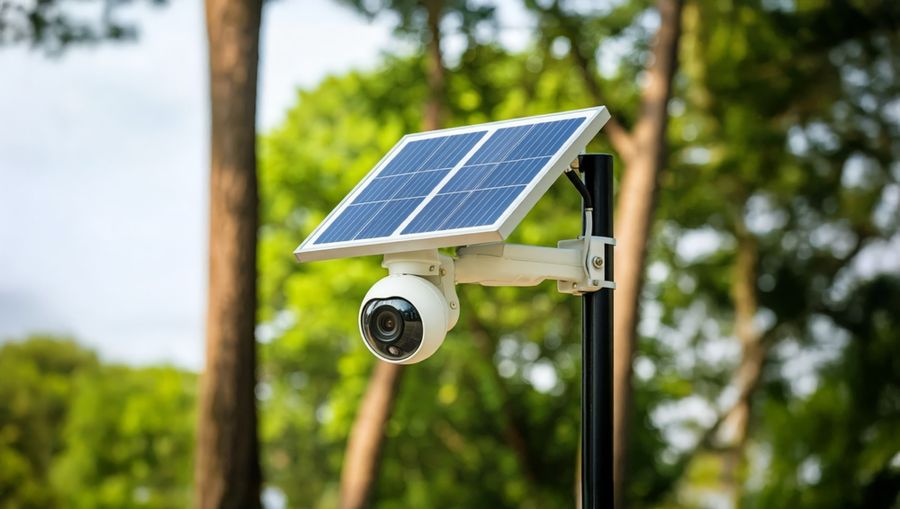
Solar security cameras can monitor gates, sheds, driveways, barns, and other outdoor areas where running an electrical cable would be difficult. Modern cameras use rechargeable batteries, while a solar panel helps restore the power consumed during daily operation. The best choice depends on the viewing area, available sunlight, Wi-Fi coverage, and preferred storage method. The top models provide different combinations of wide coverage, detailed video, local storage, and smart-home features.
Eufy SoloCam S340 for Pan-and-Tilt Coverage
The Eufy SoloCam S340 uses two cameras to provide a wide view and a closer look at distant activity. It records in up to 3K resolution, offers 8x hybrid zoom, and can pan and tilt to follow movement. Its included solar panel can attach to the camera or mount separately with a connecting cable.
The camera connects directly to Wi-Fi and has built-in storage, so it doesn’t require a hub for basic operation. Human and vehicle detection also run on the device. Buyers can add a compatible HomeBase for expanded storage and recognition features, but the SoloCam can function independently without a required monthly subscription.
Reolink Argus 4 Pro for a Wide Fixed View
The Reolink Argus 4 Pro combines images from two lenses to create a 180-degree view in 4K. This wide, fixed perspective can cover a driveway, broad yard, or building entrance without requiring the camera to rotate. Its ColorX system provides color night footage when enough ambient light is available.
Recordings can be saved to a microSD card with a capacity of up to 512GB or stored through a compatible Reolink Home Hub. Local recording doesn’t require a monthly fee. The camera runs on a rechargeable battery and supports a Reolink solar panel, although shoppers should confirm whether the selected package includes the panel.
Tapo C425 KIT for Flexible Placement
The Tapo C425 KIT combines a wire-free 2K QHD camera with a separate solar panel. A magnetic mounting base makes it easier to change the camera angle after installation. The camera also provides color night vision, two-way audio, customizable activity zones, and detection for people, pets, and vehicles.
The camera carries an IP66 weather-resistance rating, while the included panel is rated IP65. Recordings can be stored on a microSD card, or users can choose a Tapo Care subscription for cloud storage. This combination gives households a local option while leaving cloud features available for those who want them.
Ring Outdoor Cam Solar for Ring Households
The Ring Outdoor Cam Solar, formerly called the Stick Up Cam, works well for people who already use Ring doorbells, cameras, or alarms. The package combines a rechargeable Quick-Release Battery Pack with a solar panel that helps maintain the battery. It provides 1080p video, color night vision, motion notifications, two-way talk, and app-based live viewing.
The camera can stand on a flat surface or mount to a wall, giving it useful placement flexibility around patios, detached garages, and side yards. Live viewing and real-time alerts remain available without a subscription, but reviewing recorded videos requires a compatible Ring Protect plan.
Understand the Limits of Solar Charging
A solar panel reduces manual charging, but it doesn’t create the same unlimited power supply as a wall outlet. Battery levels can fall during long periods of cloud cover, heavy activity, low temperatures, or poor panel placement. Frequent live viewing and repeated motion recordings may also consume power faster than the panel replaces it.
Most battery-powered solar cameras record motion events instead of providing continuous video. For example, the SoloCam S340 doesn’t support round-the-clock recording even when connected to a HomeBase. Anyone who needs uninterrupted footage should look at a wired camera, a larger off-grid power system, or another solution designed for continuous operation.
Check Sunlight and Wi-Fi Before Installation
Watch the proposed installation area throughout the day before drilling mounting holes. The camera needs a useful view, while the panel needs direct exposure to sunlight. A separate panel offers more flexibility because the camera can face the monitored area while the panel faces the sun. Trim branches and avoid placing the panel beneath an eave that keeps it shaded.
A solar camera still needs a stable network connection for alerts, app access, and live video. Test Wi-Fi at the exact mounting point rather than assuming a nearby outdoor area has coverage. A mesh access point or outdoor-rated network equipment may be necessary for a distant gate, barn, or detached building.
Choose Storage That Fits Your Needs
Local storage can reduce ongoing costs and keep recordings available without a cloud plan. However, footage stored only inside the camera may be lost if someone removes the device. A home hub can place recordings in a safer indoor location, while cloud storage keeps copies off the property but usually requires a subscription.
Review how each camera handles full storage, missed network connections, and downloaded clips. Confirm whether a memory card, hub, or cloud plan is included. Notification previews, advanced recognition, and longer video history may also depend on optional services, even when basic recording works without a subscription.
Extend Security Beyond the Nearest Outlet
The best solar camera is the one that matches the shape of the area and the way recordings will be used. The SoloCam S340 offers movable dual-camera coverage, while the Argus 4 Pro captures a broad fixed scene. The Tapo C425 KIT balances flexible mounting with local and cloud storage, and the Ring Outdoor Cam Solar fits naturally into an existing Ring system.
Before installation, confirm sunlight, Wi-Fi strength, storage, and camera height. Solar power solves the outlet problem, but careful placement determines whether the camera remains charged and captures useful footage. A well-positioned system can extend practical monitoring to parts of a property that would otherwise remain difficult to cover.