

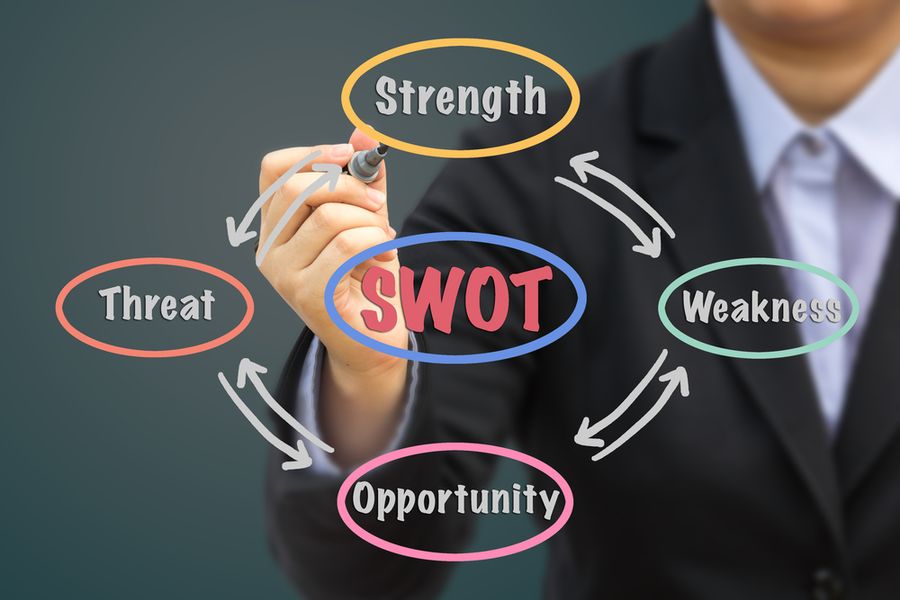
A career transition can look appealing until you compare its demands with your skills, limits, and real options. A personal SWOT analysis gives that decision a clear structure by separating strengths, weaknesses, opportunities, and threats. Used carefully, it won’t choose a career for you. Rather, it will help you test whether a move is realistic, identify gaps that need attention, and turn a broad idea into a practical transition plan.
Define the Career Decision First
Begin with one specific transition rather than asking whether you should simply “change careers.” Name the occupation, industry, or type of role you’re considering. You might compare moving from sales into project management, leaving corporate work for teaching, or entering a skilled trade. A personal SWOT analysis can be used to examine a new job, promotion, or career path.
Write down what attracts you to the move and what you expect it to change. Consider the work itself, schedule, location, advancement options, and connection to your interests. This step gives every SWOT category a shared focus. A strength that matters in one occupation may have little value in another, while a current weakness may become important when the target role requires it every day.
Identify Strengths and Transferable Value
Strengths are internal factors that may help you complete the transition. They can include skills, qualifications, work experience, education, training, certifications, professional contacts, and successful projects. Don’t stop at job titles. Break your experience into abilities such as explaining technical ideas, managing deadlines, resolving customer problems, training coworkers, or analyzing information.
Support each strength with evidence. Instead of writing “good leader,” note that you supervised a team, improved a process, or guided a project through a difficult deadline. Ask former coworkers or trusted contacts what they believe you do particularly well. Outside observations can reveal useful strengths that feel ordinary to you because you’ve relied on them for years.
Weaknesses are also internal, but they should describe gaps you can address rather than fixed judgments about your worth. Personal SWOT guidance treats strengths and weaknesses as factors within an individual’s control. A weakness might be missing software knowledge, limited public-speaking experience, an outdated credential, or little direct exposure to the target industry.
Separate serious barriers from skills that can be learned. If a job requires a state license, degree, or physical ability you don’t have, the gap may change the timing or viability of the transition. If the issue is unfamiliar software, you may be able to close it through a course or supervised practice. Record the gap, the level the new role requires, and a realistic way to address it.
Find Opportunities Outside Your Current Role
Opportunities are external conditions you may be able to use. They might include a growing local industry, an employer’s training program, a professional contact, a return-to-work program, or a role that values experience from your present field. Trends, relationships, and available resources can all be considered when identifying opportunities.
Research opportunities instead of relying on impressions. Review job postings to find repeated requirements, speak with people doing the work, and examine professional association information. The goal isn’t to collect every possible opening. It’s to identify outside conditions that connect directly with your strengths, reduce a weakness, or create a realistic route into the field.
Examine Threats Without Assuming the Worst
Threats are external conditions that could make the move harder. Examples include limited openings in your area, required training, schedule conflicts, industry contraction, strong competition, or technology changing the work. SWOT prompts commonly treat competitors, obstacles, and outside forces as possible threats. These factors deserve attention, but they don’t automatically rule out a transition.
Replace broad fears with verified details. Occupational profiles can provide information about duties, work environments, entry-level education, training, pay, and employment outlook. Compare those facts with your personal limits. A required credential may be manageable, while frequent overnight travel could make a role unsuitable for your family responsibilities. Specific information turns a vague concern into a condition you can evaluate.
Connect the Four Categories
Review the categories together instead of treating them as separate lists. Ask which strengths can help you pursue an opportunity and which weaknesses make a threat more serious. Strong presentation skills may support a move into training, but limited experience designing courses could weaken your candidacy. That connection points toward a practical next step: create a sample course or seek a small training assignment.
Then compare several possible outcomes. You might proceed now, prepare for six months, test the field through a smaller commitment, or reject the transition. Don’t judge the decision by the number of entries in each category. One licensing barrier may matter more than several minor strengths, while one strong professional connection could create an entry route that wasn’t obvious at first.
Turn the Analysis Into a Transition Plan
Convert the most important findings into actions with dates. The plan might include interviewing two people in the field, completing a course, revising a résumé around transferable skills, or applying for a related role that offers useful experience. Development plans can record short- and long-term goals, learning objectives, training activities, and expected completion dates.
Choose a review date before acting. New information may change your SWOT analysis once you speak with employers or try the work. A short project, volunteer assignment, class, or job-shadowing opportunity can test assumptions without requiring an immediate departure from your current position. Update the plan when evidence changes the balance of strengths, weaknesses, opportunities, or threats.
Make a Career Move Based on Evidence
A personal SWOT analysis can slow down an emotional career decision long enough to expose its practical demands. It shows what you already offer, what you need to improve, which outside openings are useful, and which barriers require a response.
The final choice shouldn’t come from the worksheet alone. Combine the analysis with reliable career information, direct conversations, and small tests of the new field. That process can help you move forward with preparation—or step away from an option that doesn’t fit—before making a costly commitment.